How to Value a Small SaaS Using Monthly Revenue Trends
A practical guide to using monthly revenue, profit, customer, and traffic trends to value a small SaaS based on the business that exists today.
The Monthly Trend Tells You What You Are Buying
A small SaaS listing can look great in about ten seconds. Real revenue. Real customers. A working product. A reasonable asking price. Maybe a line about “huge growth potential” to really get the imagination going. At that point, it is easy to start planning the turnaround before you have even spoken to the seller. Improve the landing page. Fix onboarding. Raise prices. Add a few features. Double revenue. Become a business genius by next Tuesday. Then you ask for the monthly financial history. That is usually when the real evaluation begins. One of the biggest lessons I have learned from reviewing small SaaS businesses is simple: the headline tells you why the deal is interesting. The monthly trend tells you what you are actually buying.

The Headline Looked Solid
At first glance, one deal looked like the kind of small SaaS acquisition almost every first-time buyer wants. It had a real product, real customers, existing revenue, and a purchase price around the range I was considering. Nothing about the headline immediately screamed disaster. That is important because most weak deals do not introduce themselves as weak deals. They usually look just good enough to make you curious. Marketplace listings often lead with:
- Trailing annual revenue
- Annual profit
- Average monthly revenue
- Current or historical MRR
- Number of users
- Profit margin
- Asking price
Annual Totals Can Hide the Current Trend
Those numbers are useful. They are also incomplete. A business may have earned $12,000 during the last twelve months, but that does not mean it is currently earning $1,000 per month. The average could be hiding a completely different trend.
Then the Monthly History Changed the Story
The problem was not one weak month. Every small business has weak months. Customers cancel. Payments fail. Annual subscriptions renew unevenly. Marketing pauses. Google changes something for no apparent reason and destroys everyone’s afternoon. One bad month is not automatically a red flag. The issue is what happens when weaker months begin forming a pattern. In this deal, the seller shared the following monthly results:
- December 2025 — Revenue: $1,013 | Expenses: $737 | Profit: $276
- January 2026 — Revenue: $3,900 | Expenses: $578 | Profit: $3,322
- February 2026 — Revenue: $817 | Expenses: $380 | Profit: $437
- March 2026 — Revenue: $932 | Expenses: $382 | Profit: $550
- April 2026 — Revenue: $722 | Expenses: $478 | Profit: $245
- May 2026 — Revenue: $611 | Expenses: $352 | Profit: $259
- June 2026 — Revenue: $592 | Expenses: $334 | Profit: $258
The Spike Was Real, but So Was the Decline
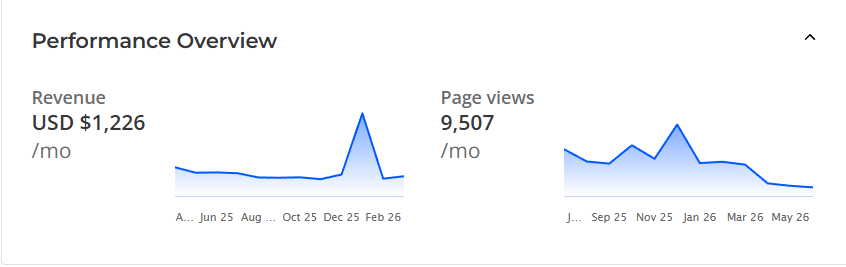
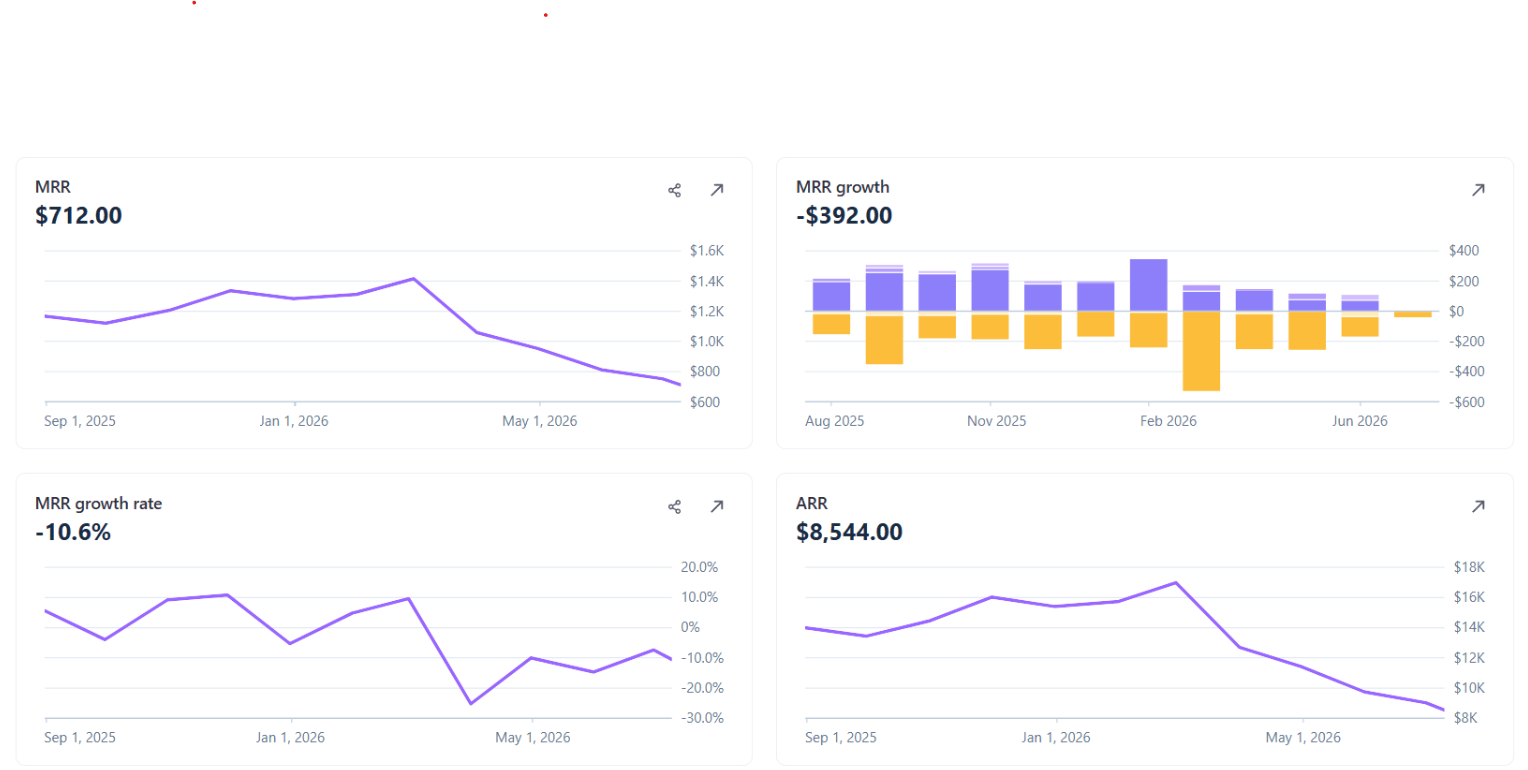
January looked excellent. The following months told a different story. Revenue fell below $1,000 immediately after the spike and eventually dropped closer to $600 per month. The seller explained that the business had entered maintenance mode in March and that active outreach, mostly through LinkedIn, had stopped. According to the seller, that was when revenue began to deflate. That explanation mattered. It suggested the product had not necessarily collapsed on its own. The decline may have been connected to the seller pulling back from customer acquisition. But a good explanation does not erase the decline. The buyer would still inherit the current version of the business. That means restarting outreach, testing whether the old acquisition strategy still works, and spending time or money rebuilding momentum. The January spike showed what the business had achieved. The later months showed what the buyer would receive on closing day. Those are not the same thing.
The Traffic Sources Added More Context
The seller also shared the business’s traffic mix:
- Referral: 45%
- Direct: 40%
- Organic search: 10%
Traffic Quality Matters as Much as Traffic Volume
That was useful because it helped explain how customers were reaching the business. But it also raised more questions. Referral and direct traffic can be valuable, but they are not always easy for a new buyer to reproduce. Direct traffic may include repeat visitors, brand recognition, bookmarks, email links, or traffic that analytics could not properly classify. Referral traffic depends heavily on where those referrals come from and whether those relationships transfer. Organic search made up only a small portion of traffic, so the business did not appear to have a large search engine actively replacing lost customers.
The Product Can Run Itself While Revenue Does Not
The seller’s position was that the app virtually ran itself and that the new owner mainly needed to understand how to market it. That might be true. But “the product runs itself” and “the revenue runs itself” are two different statements. The software may require little maintenance while the business still needs consistent customer acquisition. A vending machine can run itself too. It still performs better when someone puts it somewhere people actually walk past.
Current Revenue Matters More Than the Best Month
A strong historical month proves that the business is capable of generating revenue. It does not prove that the revenue is still available. January’s $3,900 result was encouraging, but a buyer should not automatically treat it as the normal run rate. The more relevant figures were the recent months:
- April: $722
- May: $611
- June: $592
Value What the Business Earns Today
Those numbers better represented the condition of the business near the time of evaluation. This is why I always want to know the current monthly recurring revenue and the most recent monthly results. Not the highest month. Not the best quarter. Not the average from last year. Today. The software may not have changed. The product may still work. The logo may still be sitting there looking extremely confident. But the cash flow changed, and cash flow has an annoying habit of affecting valuation.
Why a $20,000 Asking Price Can Mean Almost Anything
A $20,000 SaaS can be cheap, fairly priced, or extremely risky. The asking price alone does not tell you which one it is. Imagine a business producing $1,000 in stable monthly profit. Customers have been paying for years. Churn is low. Operating costs are minimal. The owner spends two hours per week handling support. At $20,000, that might be attractive. Now imagine another business at the same price. It earns about $600 per month in revenue, profit is closer to $250, customer acquisition has slowed, and the buyer must restart marketing. Same asking price. Completely different acquisition. This is why valuation multiples are dangerous when used without context. A low multiple does not automatically mean a bargain. Sometimes the business is cheap. Sometimes the price is simply chasing the revenue downhill.
Ask for Monthly Data, Not Just Annual Totals
Before getting serious about a SaaS acquisition, I want to see at least twelve months of monthly financials. Twenty-four months is better when the records are available. Monthly data can expose things an annual total hides:
- Gradual decline
- Seasonality
- One-time spikes
- Large annual renewals
- Failed marketing campaigns
- Customer concentration
- Revenue that disappeared months ago
- A business that peaked before it was listed
Recent Dollars Usually Matter More
A trailing twelve-month figure treats every dollar equally. A buyer should not. A dollar earned last month usually tells you more about the current health of the business than a dollar earned eleven months ago. You also need to understand what produced each month’s revenue. Separate recurring subscriptions from:
- Lifetime deals
- One-time purchases
- Setup fees
- Consulting
- Done-for-you services
- Refunds
- Annual plans
Recent Profit Matters Too
Revenue is only half the picture. You should also review monthly expenses and profit. In this deal, monthly profit fell from more than $3,300 in January to roughly $250 by April, May, and June. That is not a minor difference. The annual profit total may still benefit from the stronger January result, but the recent earning power was much lower. A business may also maintain similar revenue while expenses quietly rise because of:
- Hosting
- API usage
- Contractors
- Advertising
- Software subscriptions
- Refunds
- Payment processing fees
You Are Buying Current Earning Power
You are not purchasing a historical average. You are purchasing the current earning power of the business. A simple monthly table showing revenue, expenses, and profit can reveal more than five paragraphs of seller commentary. Numbers are rude like that.
A Decline Does Not Automatically Kill the Deal
Declining revenue is not always a reason to walk away. Sometimes there is a legitimate turnaround opportunity. In this case, the seller had stopped active outreach. If the previous LinkedIn strategy had reliably produced customers, a new owner might be able to restart it. But that needs to be verified. A buyer should ask:
- How many customers came from LinkedIn?
- What exact outreach process was used?
- How many messages were sent?
- What was the conversion rate?
- How long did the process take each week?
- Did customers stay after signing up?
- Would the strategy still work under a new owner?
It Just Needs Marketing Is Not Enough
The phrase “it just needs marketing” should never be accepted as a complete answer. Every struggling digital business apparently just needs marketing. Sometimes it also needs a better product, lower churn, a repaired codebase, and divine intervention.
Value the Business That Exists Today
One of the easiest mistakes is valuing a declining SaaS based on its old performance. Maybe it once earned several thousand dollars in a month. Maybe it had more active customers. Maybe the seller believes a motivated buyer can bring it back. That history matters, but it should not become the main basis of your offer. Your valuation should focus on:
- Current revenue
- Current profit
- Current customers
- Current churn
- Current owner workload
- Current technical condition
- Current acquisition channels
Keep Future Improvements in Your Upside
Potential growth belongs in your upside. You should not pay the seller today for all the improvements you plan to make tomorrow. That is like buying a damaged house at the fully renovated price because you already own a hammer.
The Lesson
Never value a small SaaS only from the listing summary. The headline may be accurate and still fail to show the current health of the business. Review monthly revenue, expenses, profit, MRR, new customers, and cancellations. Compare the most recent three months with the last six and twelve months. One bad month is normal. Several declining months are a story that needs an explanation. A $20,000 SaaS can be cheap, fair, or expensive depending on what the recent numbers actually show. Before making an offer, ask yourself: am I valuing the business that exists today, or the stronger version that existed six months ago? Because once the deal closes, the seller keeps the history. You get the current business.